


Home / Sectors - QSR & Hospitality
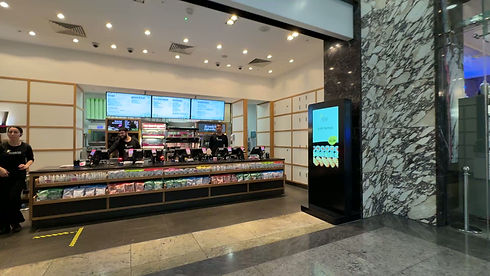
The hospitality sector faces mounting pressure from every direction.
Firstly, there’s rising operational and staffing costs driven by legislative changes and inflation. Secondly, retailers have to deal with staff shortages and changes around hiring, and uncertainty around the future of contracts. That’s before we get into complexity in supply chains, and consumers who demand both speed and value whilst being increasingly selective about where they spend. Poor service loses you revenue, but delivering excellent service has never been more expensive or operationally challenging.
The businesses thriving in this environment put customers at the heart of everything they do, and as part of that, are building intelligent digital ecosystems that handle operational complexity automatically. This digital transformation allows staff to focus on what drives spend: customers having a positive experience. You can transform your guest experience with dynamic menus, self-service kiosks, and automated venue management that work harder, so your team can be freed up to work on higher margin activities.
The Twin Challenges of Efficiency and Experience
In any business, profits are everything. Revenue is nice, but margins are non-negotiable. For hospitality though, that’s an increasingly hard challenge to manage. Labour costs continue rising whilst consumer spending remains cautious. Every percentage point of operational efficiency matters, and every opportunity to increase transaction value counts.
Digital systems help address both challenges simultaneously. Dynamic menu boards eliminate the recurring cost and waste of printed materials whilst enabling pricing strategies that optimise revenue, allowing for greater margins than fixed printed prices.
When you can update prices, swap menu items, or highlight specific offerings instantly for your customers, you can respond to supply costs, weather patterns, daypart performance, or local competition in real time. Self-service kiosks relieve pressure on front-of-house teams, allowing them to focus on hospitality rather than order taking, whilst typically increasing average transaction values through better upselling and customisation options.
The technology landscape has shifted customer expectations fundamentally. What market leaders like McDonald's, Caffè Nero, and Itsu have normalised becomes the baseline expectation everywhere. Diners increasingly expect digital ordering, clear nutritional information, and the ability to customise their meal without negotiation. Meeting these expectations allows you to remain competitive.
The operational benefits compound across your estate. When menu updates, pricing changes, and compliance information flow automatically from your central system to every location, you eliminate the administrative overhead that currently consumes management time. Regional managers stop spending hours coordinating menu rollouts and start focusing on service quality, staff development, and local market opportunities.
A Menu That Works as Hard as Your Kitchens
Digital menu boards are revenue optimisation tools that happen to display food, of which the screens themselves are the least interesting part. What matters is what they enable.
Automatically switch from breakfast to lunch menus at precisely the right time for each location, accounting for local trading patterns rather than applying one schedule everywhere. Trigger rainy-day specials that move soup and hot drinks when weather patterns suggest demand. Adjust pricing for high-demand items during peak periods or promote slower-moving inventory before wastage becomes a problem. None of this requires manual intervention. Your menu becomes responsive to business conditions in real time.
Calorie counts and allergen information integrate directly from your POS or inventory system, updating automatically as recipes change or you change your suppliers. This isn't just about compliance, though obviously that matters enormously given the regulatory environment, and the serious consequences of allergen mistakes. It's also about removing the administrative burden on area managers, and ensuring information accuracy across every location. When a supplier changes an ingredient or you reformulate a recipe, the information updates everywhere instantly.
Brands like Itsu and Caffè Nero use digital menus to maintain consistency and compliance across hundreds of locations whilst retaining the flexibility to respond to local market conditions. They're using screens to manage operational complexity at scale whilst maintaining the brand standards and customer experience that drive their business.
The impact on transaction value is measurable. High-quality food photography and video content drives impulse purchases and premium upgrades. Clear presentation of customisation options encourages personalisation, which increases both ticket size and customer satisfaction. Promotional content can be targeted by daypart, location performance, or specific business objectives, turning your menu boards into active revenue drivers rather than passive price lists.
Guide, Inform, and Impress
Large hospitality venues and event spaces face a different operational challenge, defined by their scale. They have to help thousands of visitors navigate complex environments, whilst managing constantly changing schedules and room allocations. Static signage becomes outdated the moment it's signed off, let alone printed, whilst staff spend enormous amounts of time giving directions and answering basic questions.
Interactive kiosks and mobile-integrated wayfinding systems guide visitors through complex spaces without staff intervention and enable people to manage their way themselves. Visitors can search for specific rooms, facilities, or events and receive step-by-step directions appropriate to their current location. The system updates automatically as spaces are reconfigured, events move locations, or temporary changes affect access routes. For venues managing multiple events simultaneously with different access requirements and schedules, this significantly improves visitor flow and experience, whilst reducing the operational burden on front-of-house teams.
Digital displays can link directly to your existing or new event management system and sensors, showing real-time room allocations and schedules that update automatically as events run early, late, or move locations. When a conference room schedule changes or a speaker swap occurs, the information propagates instantly throughout your venue without requiring staff to manually update dozens of signs or repeatedly explain changes to confused visitors.
This operational integration eliminates a significant source of visitor frustration whilst freeing staff to focus on higher-value hospitality tasks.

Client Spotlight: Olympia London
Olympia London manages one of the UK's most complex event venues, hosting everything from major trade shows to conferences, concerts, and exhibitions across multiple interconnected spaces. With thousands of daily visitors navigating an intricate Victorian building augmented by modern extensions, wayfinding and event information were constant operational challenges.
Pixel Inspiration delivered an integrated digital signage network that connects directly to Olympia's event management system. Real-time room schedules, dynamic wayfinding, and event-specific information update automatically throughout the venue. When event schedules change or spaces are reconfigured, the information flows instantly to every relevant screen without manual intervention. The result is improved visitor experience, reduced staff workload, and the operational flexibility to manage the complex, constantly changing schedule that defines modern venue operations.
Why Top Brands Trust Pixel with Their Customer Experience
Multi-site hospitality operations require technology partners who understand the operational reality of rolling out and maintaining systems across dozens or hundreds of locations. You need reliability, scale, and the responsiveness to handle problems before they impact customer experience.
Whether it's 100 sites or 1,000, we manage the rollout, installation, and maintenance with the same rigour. We handle thousands of displays as easily as one because we've built our operational model specifically for multi-site deployments. Our nationwide field engineering team works inside and outside trading hours, installing systems without disrupting service. When something needs attention, our 24-hour UK-based support desk ensures issues are resolved quickly, often before your team even notices there's a problem.
We don't force hardware choices on you. We source the right technology for your specific environment, whether that's heat-resistant kitchen displays that withstand the conditions behind the pass, high-brightness window-facing screens that remain visible in direct sunlight for street-facing QSRs, or interactive kiosks with payment integration for self-service ordering. Your operational requirements and brand standards drive our recommendations, not vendor relationships or inventory we need to move.
Analytics on dwell time, queue flow, and customer interaction patterns help you optimise floor plans and staffing levels. When you can see which menu sections attract attention, how long customers spend deciding, and where queues form during peak periods, you make better decisions about layout, menu structure, and resource allocation. This operational intelligence helps you refine the experience people receive, whilst improving efficiency.
Our content management systems integrate with your existing technology infrastructure. POS systems, inventory management, event scheduling, booking platforms, and any other operational systems that contain information customers need can feed directly into your displays. This creates a seamless operational environment where information flows automatically rather than requiring manual coordination across multiple systems.
Trusted by the Best in the Business
We work with leading hospitality brands, who trust us to deliver technology that enhances their customer experience whilst improving operational efficiency. They chose to work with us, because we understand hospitality operations, deliver at the scale they require, and provide the ongoing support that keeps systems running reliably across their entire estate.
Future-Proof Your Venue Today
The hospitality businesses winning in this market are focused on creating efficient, technology-enabled operations, which deliver exceptional customer experience, whilst managing costs. Your digital estate can be a revenue generator, but only if it's designed, implemented, and supported with genuine hospitality expertise.
We'll work with you to understand your specific operational challenges, assess your current infrastructure, and design solutions that deliver measurable improvements in both customer experience and operational efficiency. Whether you're upgrading a single flagship location or rolling out across hundreds of sites, we bring the scale, expertise, and hospitality-specific knowledge to deliver results.
Ready to turn your digital estate into a revenue generator? We’re here to help.


